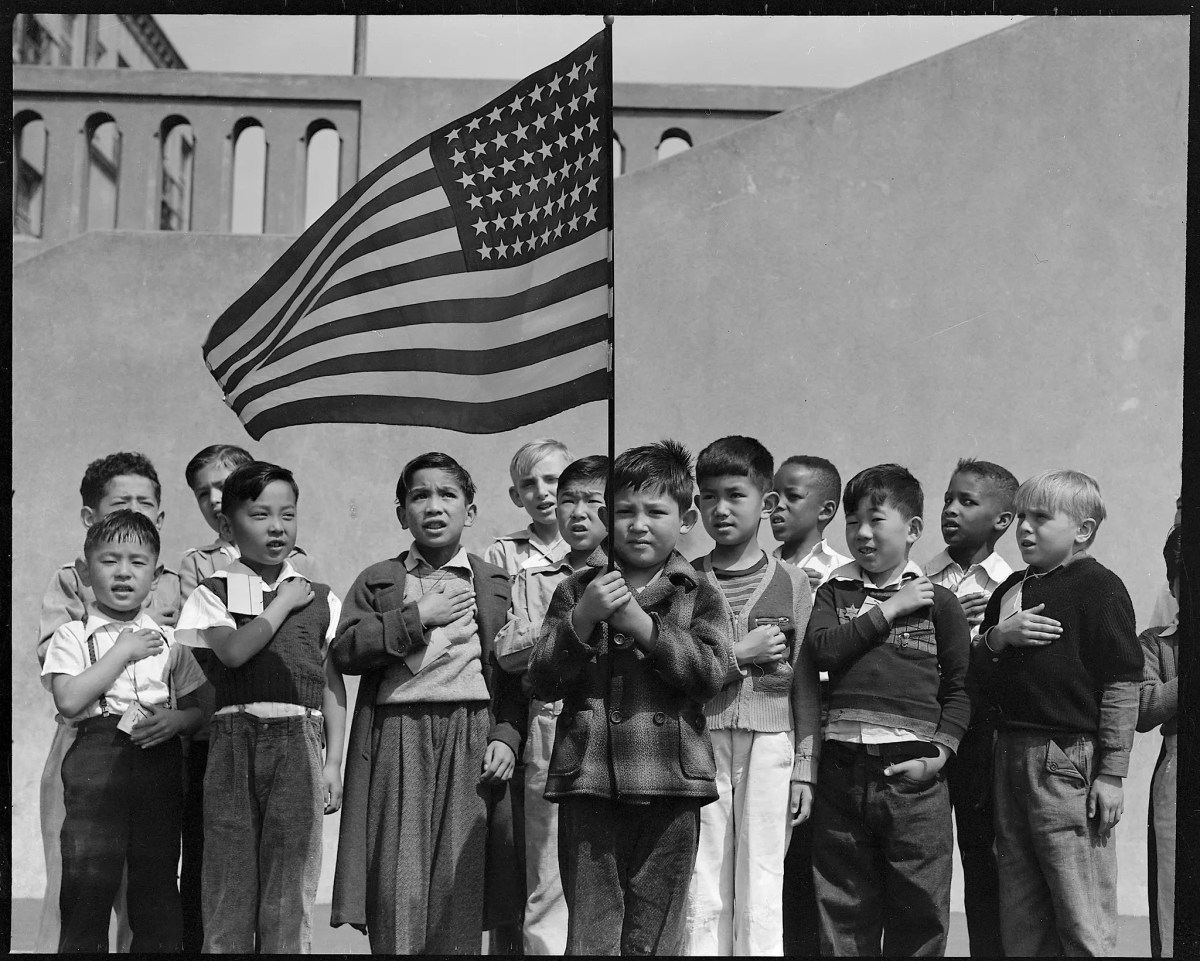
Journalism’s codes of ethics are statements of abiding principles that intended to ensure the reliability of the reported information and address the changing journalistic practices. Though different institutions publish their versions of guides that encourage people who engage in journalistic practice to abide by, most of them share common elements, including the principles of minimizing harm, accountability and independence. While in the 1940s, news coverage on the forceful relocation of people with Japanese ancestry exhibits the lack of such ethical standards in the news industry. Like William Randolph Hearst once boasted, “you can crush a man with journalism.” The biased, intemperate diction in the news stories and the negligence of constitutionality of the decision severely defamed the Asian American group during WWII, amplified social prejudice on them and begotten serious ramifications for decades.
After the surprise attack on Pearl Harbor on Dec. 7, 1941, military and political leaders began to suspect that Imperial Japan is about to launch a full-scale invasion on Hawaii and the U.S. continent, and public opinion gradually turned against Japanese Americans living on the West Coast with the fear of potential fifth column activity[i]. Lt. General John L. DeWitt, leader of the Western Defense Command and who administrated the internment program, repeatedly told the newspaper that “A Jap’s a Jap” and testified to Congress with a report, though pervaded with known falsehoods. For instance, examples of sabotage DeWitt employed in the report are later proved as a result of cattle-damaged power lines[ii].
Despite those overt fallacies, President Franklin Roosevelt issued Executive Order 9066 in February 1942, amid the concern that Japanese Americans could be a threat to the national security, which authorized the Secretary of War to designate certain areas as military zones and to restrict access to those areas on the grounds of wartime necessity.
Under the Executive Order, more than 112, 000 Japanese Americans—79,000 of whom were American citizens—were forcefully removed from the West Coast to ten internment camps in remote areas. Japanese Americans were given a few days to prepare the removal, and they had to sell their properties for much less than they were worth[iii].
In the extensive coverage of the Executive Order and forceful removal of Japanese Americans, reporters at that time neglected the principle of minimizing harm. According to the Society of Professional Journalists Code of Ethics, ethical journalism “treats subjects as human beings deserving of respect.” Also, it urges journalists to show compassion for people might be affected by news coverage and consider the long-term implications of the extended reach and permanence of publication.[iv] For instance, in a Los Angeles Times article about the presidential appraisement of the relocation program published on Feb. 7, 1942, the author describes the issue of the public distrust of American-born Japanese as “native-born Japanese problem.[v]” Also, in an Arizona Republic article about Japanese American social organizations’ aid in the “exodus,” the editor titled the story “Jap League Aids Exodus”;[vi] and the word “Jap” is classified as “disparaging and offensive” by the Merriam-Webster Dictionary. In the modern journalism world, the offensive word choice like “Jap” and “native-born Japanese problem” is undoubtedly prohibited. Yet, with the underdeveloped codes of ethics at that time, the controversial, though widely accepted, diction is exacerbating the rampant social prejudice on Japanese Americans during wartime, which could bring further harm to the racial group at that time.
Moreover, as knowingly tendentious and disputable, journalists at that time failed to improve the awkward situation as they omitted fact-check of political remarks. When dealing with stories where hate-speech is used, it is vital not to sensationalize and aggravate the sentiment. Therefore, particular steps are needed, otherwise reporting it without particular care could only serve to reinforce the biased remarks. For instance, the Ethical Journalism Network provides a Checklist for Tolerance when dealing with such stories.[vii] Per to the Checklist, journalists should reckon if there is a danger of inflaming passions and violence and is the speech fact-based in the beforehand of writing. In the process of writing, it demands journalists to avoid cliché and stereotypes, be temperate in language, and be sensitive to the audience. These practices have been frequently discussed in the field as the incumbent president usually makes biased remarks like “Chinese virus.” However, during the 1940s, ethical dilemmas in likely situations did not reach a broad realization. For example, in a New York Times article published on July 16, 1943, its title was “Disloyal Japanese to be Segregated,” and the term “disloyal” has been mentioned a couple of times in the passage.[viii] However, the process of distinguishing “loyal” and “disloyal” Japanese is merely looking for indications of preference toward Japan or the U.S. This claim is not fact-supported and cannot be tested. Therefore, the term “loyal” is a dangerous term used in the journalistic publication as it would inflame bias and prejudice to a group of people.
Last but not least, journalists failed to uphold the constitutional freedom of the press. One of the significant roles of free journalism is to reveal the truth and challenge authority when they abuse their power or creates injustice in society. In this case, as I aforementioned, the report against Japanese Americans that DeWitt submitted are largely biased and unaccountable. As such, news outlets should remain independent from the political instigation and rebuke the authority. In fact, a considerable portion of people realized the dubious constitutionality of the Executive Order. For instance, in Sept. 11, 1942, Santa Ana Register published a debate between Norman Thomas, chairman of the Executive Committee of Post War World Council, and Rex Stout, a celebrated writer.[ix] In the debate, Thomas claimed that “no single charge has been filed against [Japanese Americans].” “This dictatorial power,” Thomas continued, “was inspired by popular panic originating from false stories of Japanese sabotage, and nurtured by racial prejudice and desire to acquire farms and businesses made prosperous by Japanese.” Similarly, in a debated published on The Central New Jersey Home News in 1943, Roger N. Baldwin, executive secretary of the American Civil Liberties Union, contends that since American law recognizes everyone who born on American soil, the relocation camp is a severe infringement on American citizens’ constitutional rights, regardless of their ancestry.[x] Clearly, nothing in the Bill of Rights prohibits the cooperation of newspapers and government, but we can logically assume that the intent of founders is to divide the press and government from institutional partners. Therefore, to protect social justice and unveil the truth, the media should play a role in challenging the falsehood of authorities. Such independence is at the very heart of any ethical codes respecting the conduct of the press.
Though the Civil Liberties Act of 198 exemplified the Japanese American redress movement, the aftermath of the internment camp is lingering. Not only does it leave trauma to detainees, but it also reminded us of the essential role of ethical journalistic conduct, including minimizing harm, fact-check and independence, that could help protect social justice and civil rights.
[i] Irons, Peter. (1993). Justice At War: The Story of the Japanese American Internment Cases. University of Washington Press. pp. 7–9. ISBN 9780520083127.
[ii] Japanese Internment Camps. (2009, October 29). Retrieved March 22, 2020, from https://www.history.com/topics/world-war-ii/japanese-american-relocation
[iii] On internment, see Ira Katznelson, Fear Itself: The New Deal and The Origins of Our Time (New York: Liveright Publishing, 2013), 339; Roger Daniels, Sandra C. Taylor, Harry H.L. Kitano, eds., Japanese Americans, from Relocation to Redress (Seattle: University of Washington Press, 1991); Wendy L. Ng, Japanese American Internment during World War II: A History and Reference Guide (Westport, Conn.: Greenwood Press, 2002).
[iv] SPJ Code of Ethics – Society of Professional Journalists. (n.d.). Retrieved March 22, 2020, from https://www.spj.org/ethicscode.asp
[v] In 1942 President Roosevelt gives executive order to remove Japanese Americans from Pacific Coast. (n.d.). Retrieved March 22, 2020, from https://www.newspapers.com/clip/22376527/in_1942_president_roosevelt_gives/
[vi] Japanese American Citizens League aids in Japanese American “exodus” from Pacific Coast. (n.d.). Retrieved March 22, 2020, from https://www.newspapers.com/clip/22440769/japanese-american-citizens-league-aids/
[vii] Hate Speech: A 5 point test for Journalists – A Checklist for Intolerance. (n.d.). Retrieved from https://ethicaljournalismnetwork.org/resources/publications/hate-speech/a-checklist
[viii] DISLOYAL JAPANESE TO BE SEGREGATED. Retrieved from https://search-proquest-com.libproxy1.usc.edu/hnpnewyorktimes/docview/106723512/fulltextPDF/7C948FAA94254B46PQ/1?accountid=14749.
[ix] Effect of internment on Japanese-American-owned farms in California. (n.d.). Retrieved from https://www.newspapers.com/clip/22440947/effect_of_internment_on/
[x] Debate: Is Internment of Japanese Americans Constitutional? (n.d.). Retrieved from https://www.newspapers.com/clip/22377166/debate_is_internment_of_japanese/

 Xiangyuan Chi