In their article “Still Standing, Jared Kushner and Ivanka Trump Step Back in the Spotlight,” Maggie Haberman and Katie Rogers, two accomplished Washington correspondent for The Times, proffered a host of anecdotes and evidences with dispassionate description to inform the audience how Ivanka Trump and Jared Kushner step back from public scrutiny and prepare for more visible push of their projects. Nevertheless, few glitches within the article unexpectedly diminish the credibility of the passage from multiple perspectives.
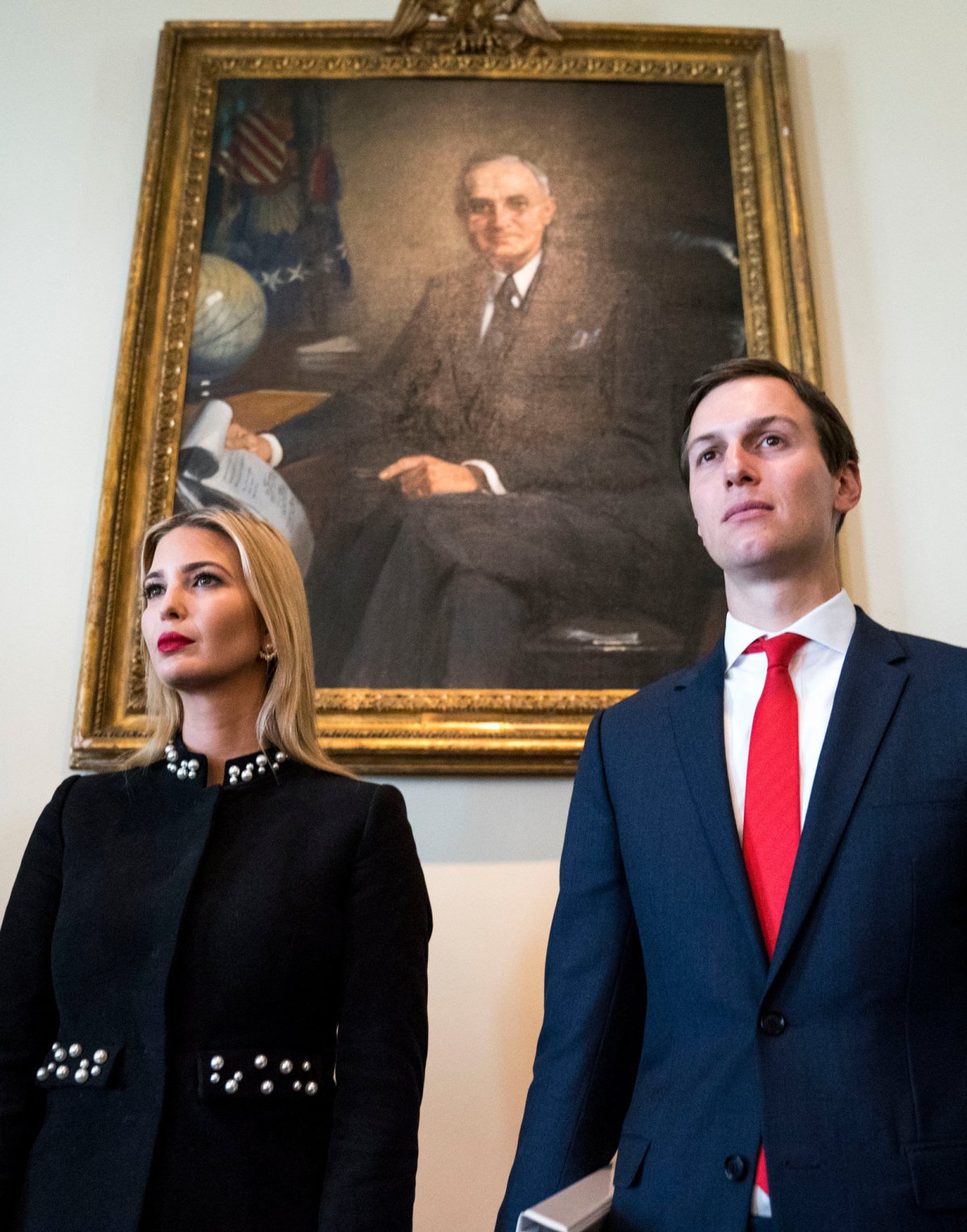
The feature photo caught my attention at first glance. In that photo, the couple is standing ahead of a portrait of President Truman with a spotlight illuminating it, which resonates with the spotlight metaphor in the title. Also, while the couple’s influence concentrates on internal conflicts, President Truman is one of the most celebrated diplomats in American history, which constitutes an intriguing conflict.
However, the text is less credible than it should be due to the flaws I will be arguing in the rest of the paper. For readers possessing strong partisan ideologies, this article could either prove that the president and his families are unpopular, deceitful, and egoistic, or affirm that the New York Times is posting “fake news” to “search and destroy” the president.
Sources in the article are generally passable, as there are a significant number of them ranging from variable backgrounds, which all guarantee the prima facie credibility of the passage. However, we may find some sources questionable via PIE analysis. For instance, authors include some detractors of the couple, like Hilary Rosen, a renowned Democratic strategist, as sources. I believe Ms. Rosen has sufficient Proximity and Expertise to handle political issues, but she has a low Independence score due to the conflict stemming from political rivalry. Similarly, authors also quoted from the couple’s allies like Steven Mnuchin. These sources, likewise, has a low Independence amid high Proximity and Expertise due to the conflict of interest, which may engender them to hide some critical details.
In terms of motivation, as aforementioned, Maggie and Katie did a pretty good job of informing the audience. However, motivations of some sources, especially those critics of the couple, may emerge from persuasion rather than informing. Specifically, the authors quote from Ms. Rosen, saying, “how do they sleep at night” to exemplify the couple’s failed attempt to stop the separation of immigrant families. This rhetorical question, which may be taken with aversion and hostility, is quite appealing and persuasive for readers who were familiar with the incident; and this might skew their judgment and interrupt the dispassionate tone of the passage.
When it comes to evidence analysis, I raised skepticism several times as authors include multiple unverified anecdotes. For instance, the authors mentioned that Ms. Trump privately handed a phone to Ms. Collins in a car that the president is on the line. The only possible witness would be the driver of the car, but authors did not tell the name or position of the source. This kind of anecdote, without verification from sources, could only undermine the credibility of the article, especially for works appearing in the New York Times, who is reputable for its accuracy.
Despite glitches in source, motivation, and evidence, the passage develops with valid logic. Externally, the passage delivers pretty accurate information in light of my knowledge before reading. Internally, authors provided adequate sources and evidence to support their conclusion, and the conclusion stretches over evidence tightly, dodging from common media logic failures like Non-sequiturs and overgeneralizations.
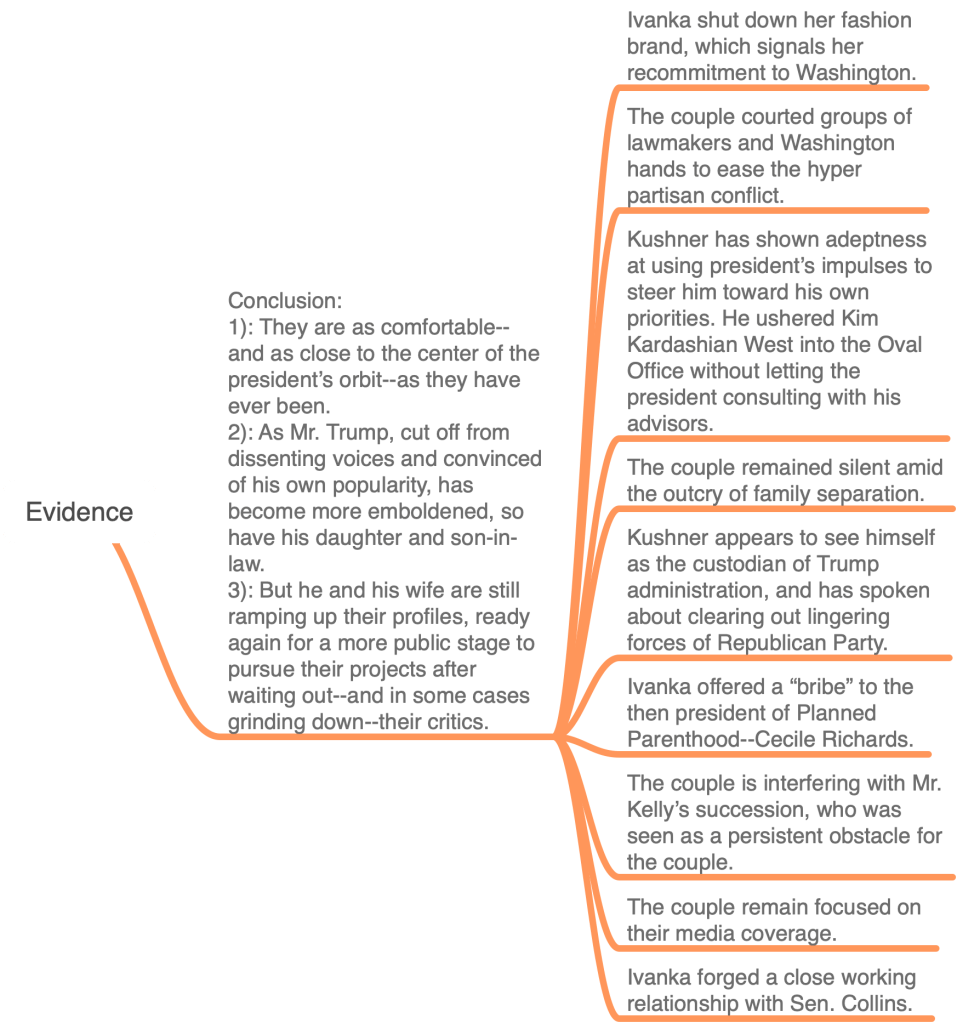
Last but not least, the central problem of the passage rests on the “left out” assessment. As I stated, most sources in the article have a low independence level, which undermines the accountability of sources’ information and weakens the conclusion. For example, the “zero tolerance” measure was mentioned a couple of times, which, however, were all spoken from a Democratic or mainstream perspective, condemning that the measure is fundamentally inhumane. If authors could include the rationales behind the “zero tolerance” policy, which refers to the prosecution of illegal immigrants, it could dramatically boost up the credibility of the passage and help support the conclusion that the Trump family has been “emboldened” as they made utilitarian decisions which suspended apparent ethical concerns.
To sum up, this is an undeniably quality feature story, but a few slips within the article, detected by the SMELL test, raises concern over the credibility of the article and exacerbates partisan bias for different readers.
(Word count: 748)

 Xiangyuan Chi